
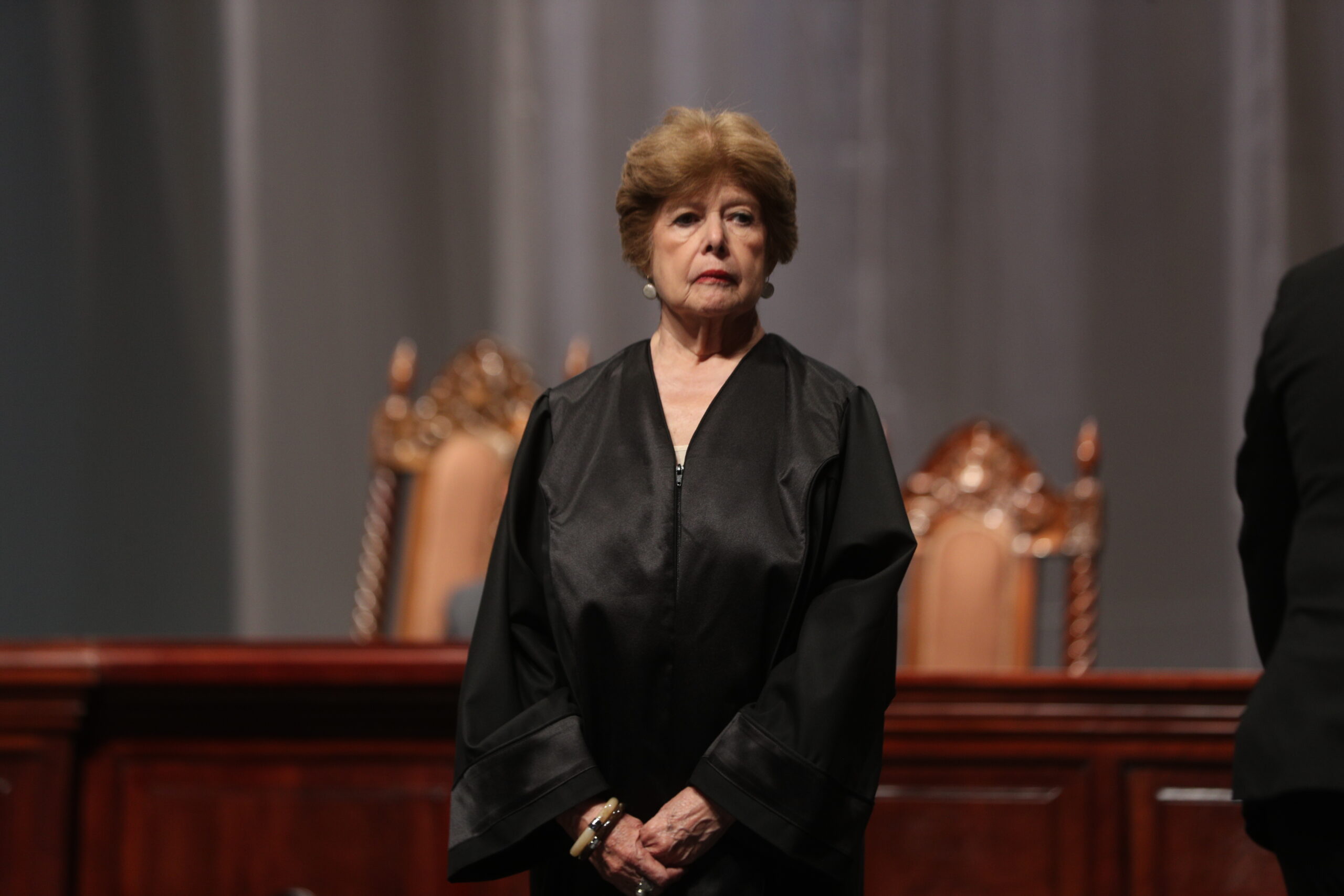
The new magistracy of the Constitutional Court (CC) took office in the early hours of Tuesday, April 14, in the midst of legal actions against the titular magistrate Astrid Lemus.
This April 15, Lemus was interviewed in Free Press Radio and he referred to the complaints against him and how the inauguration of the regular and alternate magistrates was.
One of the questions was how she explains the controversy and rumors about attempts to prevent her inauguration as a magistrate. Lemus responded that it is not explained why there were so many attacks against him, both during the election and after.
According to her, they were “harsh, selective and baseless attacks.”
The judge was also asked if she felt supported by the Court during her nightly inauguration. He responded that the decision on the time was made by the outgoing Court. However, that schedule helped dispel doubts about possible actions against him, such as rumors of an arrest warrant.
He recalled that, after his election by the College of Lawyers and Notaries of Guatemala (Cang), an attempt was made to question the result.
Lemus stated that she does not know the content of the complaints, since they are confidential, but she knows that there were attempts to involve her in processes, including arrest requests that were unsuccessful.
He indicated that there is supposedly a complaint that led to the raids during the Cang election.
He added that it is also said that it is mentioned in the process that is being followed by the events at the University of San Carlos two years ago, when the campus was taken over.
On another topic, Lemus stated that his objective is to fulfill the function that corresponds to a magistrate. In that sense, it has perceived a lot of hope from the population, and its aspiration is to respond to those expectations and fulfill its functions in an integral manner.
According to the judge, the challenges are many and the work of the CC is complex; Furthermore, the Court is currently discredited. He stated that the great challenge is to recover its credibility and make it respond to what the law establishes.
Regarding the number of cases that reach the CC, Lemus indicated that the Court is being seen as a third instance, which should not happen, as this can cause a collapse.
He added that the poor functioning of ordinary justice makes people not trust and turn to the CC.
Lemus was also asked about how she interprets the request of three titular magistrates to immediately hear an injunction related to the nomination commission for attorney general.
He said the request was submitted shortly after they took office early Tuesday morning.
He said that this matter is controversial due to the interests at stake and that more legal actions are likely to be filed. The legal action seeks to define whether or not the judges are suitable to be candidates for attorney general.
He reiterated that there will probably be more actions, especially in the most difficult stage of the process, which is the selection of candidates for prosecutor.
Another question was what answers to those who believe that the CC is divided into blocks. Lemus responded that it is normal for it to be perceived this way, because some magistrates have already worked together.
He added that there is no need to get ahead of ourselves, since there will be unanimous decisions and others in which there will be division, depending on each case.
The judge concluded that she must adapt to the CC’s work system, which is quite demanding, and face the high volume of cases, in addition to complex issues such as the election of the attorney general and other institutional processes.
Stay up to date with the Now newsletter. Key information at the moment it happens. Subscribe here.