
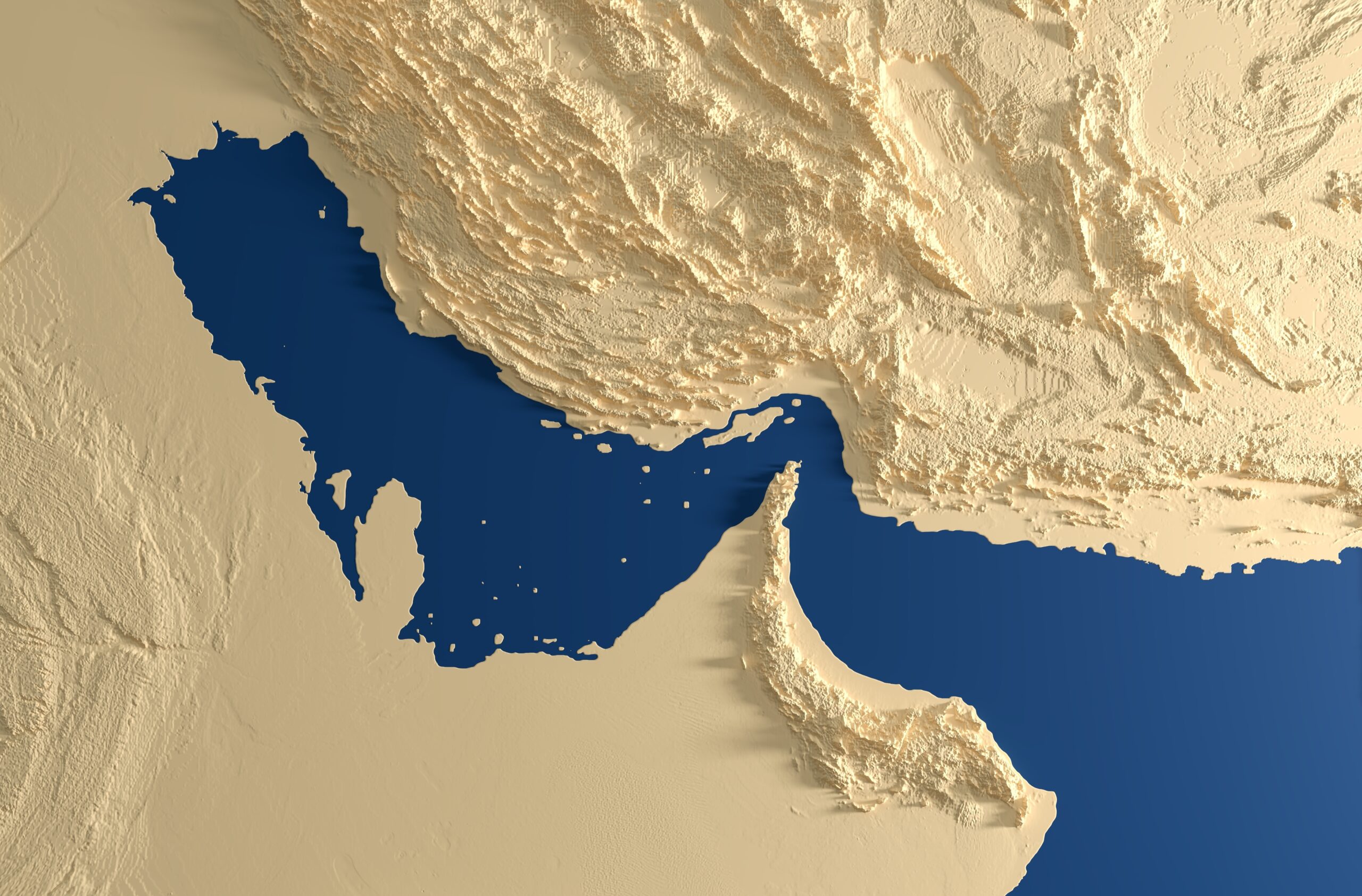
It may take six months to completely demine the Strait of Hormuzwhere the Iranian military has placed mines, and such an operation is unlikely to take place until the war between the United States and Iran ends, the Pentagon has told Congress. This assessment means that the economic impact of the conflict could extend until the end of this year or even beyond. A senior War Department official shared that information during a classified briefing Tuesday to members of the House Armed Services Committee, according to three officials familiar with the conversation.
The schedule, which has generated frustration among both Democrats and Republicans, according to two of these people, is the latest sign that gasoline prices and oil could remain high long after any peace agreement is reached. Beyond the economic repercussions, such an outcome could also have major political implications in the United States, especially for Republicans, as the November midterm elections approach. President Donald Trump’s decision to go to war has proven unpopular with most Americans, recent polls show, and has fractured his political base, which elected him in part because of his repeated promises to avoid military conflicts abroad and focus more on domestic issues.
On Wednesday, the average price of a gallon of gasoline in the United States was $4.02, up from $2.98 just before the war began in February. Trump has been hesitant about when gas prices might drop, saying this month that they “could be the same or maybe a little bit higher” for lthe midterm elections, before declaring that they would be “much lower” before the elections. His Treasury Secretary, Scott Bessent, said that it could be at the end of September when they can “have gasoline at $3 again.”
Three officials, who spoke on condition of anonymity due to the sensitivity of the issue, said lawmakers were told that Iran may have placed 20 or more mines in and around the Strait of Hormuz, a vital shipping lane for transporting de oil from the Middle East through the Persian Gulf. Some were placed remotely, using GPS technology, which has made it difficult for US forces to detect them during deployment, a senior defense official told lawmakers. Others are believed to have been installed by Iranian forces, using small boats.
The Pentagon refused to answer questions about the time that, according to military calculations, it could take to clear the mines. A spokesman, Sean Parnell, issued a brief statement acknowledging that the information was revealed in a classified briefing for lawmakers and calling it “inaccurate.” “By deciding to publish these false claims, Washington Post “He has made clear that he cares more about promoting an agenda than the truth,” the statement said. The US Central Command, which oversees operations in the region, declined to comment and the White House referred questions to the Pentagon. The blockade of maritime traffic in the Strait of Hormuz has become a flashpoint in the war.
Iran has declared it closed and has even attacked some ships to harm the world economy and the Trump administration, while Washington and Tehran press for an end to the war. Before the conflict, about 20% of the world’s oil transited through this strait, and countries such as Japan, South Korea, China and other Asian nations were heavily dependent on energy from the Middle East. Trump has insisted that Iran end its nuclear program, hand over all of its highly enriched uranium and completely reopen the strait, with the threat of further military action if it does not comply. Iran has said it will not continue negotiating with U.S. officials unless the president lifts the naval blockade he imposed this month to stifle Iran’s oil-based economy.
Iran began laying mines in the strait in March, as US and Israeli forces continued their attacks on the country, a detail CNN had previously reported. Trump, for his part, threatened that that country would face consequences “of a magnitude never seen before” if it did not remove the mines that “may have been placed.” In the days that followed, the Pentagon highlighted an effort to attack Iranian ships that could lay mines. Defense Secretary Pete Hegseth declared on social media that U.S. forces were destroying those ships with “relentless precision” and that the United States “will not allow terrorists to hold the Strait of Hormuz hostage.”
Iran’s Deputy Foreign Minister Majid Takht-Ravanchi responded by denying that they were laying mines. The New York Times, Citing U.S. officials, it reported this month that Iran apparently has not been able to find all of the mines it laid. The latest Pentagon assessment was shared with lawmakers after Trump claimed on social media that “Iran, with the assistance of the United States, has removed or is removing all sea mines” from the Strait of Hormuz. This statement, broadcast on Friday, amid a series of messages posted by the president on his Truth Social platform, coincided with his apparent efforts to reassure markets and project confidence that an agreement to end the war was near.
Trump announced on Tuesday he extended theindefinite end of the two-week ceasefire. According to him, the Iranian leadership is “seriously divided” and needs to “present a unified proposal.” His remarks came amid signs that Iranian officials were reluctant to meet for a new round of negotiations. cnn reported in March that a Defense Intelligence Agency assessment concluded that Iran could keep the strait closed for between one and six months, and the presence of mines would be a relevant factor. Pentagon spokesman Parnell then told the network that a six-month closure of the Strait of Hormuz is impossible and completely unacceptable to Hegseth. It is unclear what plan the US military would implement for a demining operation.
The authorities have mentioned the possibility of using helicopters, drones and divers specialized in explosives disposal. Some merchant ships transited the Strait of Hormuz this month during the ceasefire, but shipping traffic came to a standstill again last weekend after Iranian forces opened fire on tankers and again declared the sea passage closed.
Richard Nephew, an expert on Iranian diplomacy and senior researcher at Columbia University, said the six-month deadline to clear the strait will likely shake oil and gas markets, given the concern insurers, shipowners and captains will have about navigating a mined shipping route. “Not many people will be willing to take that risk,” he said. The presence of mines might not cause a “total disruption,” Nephew explained, but the consequences of a two-track strait becoming partially unusable could be significant.