
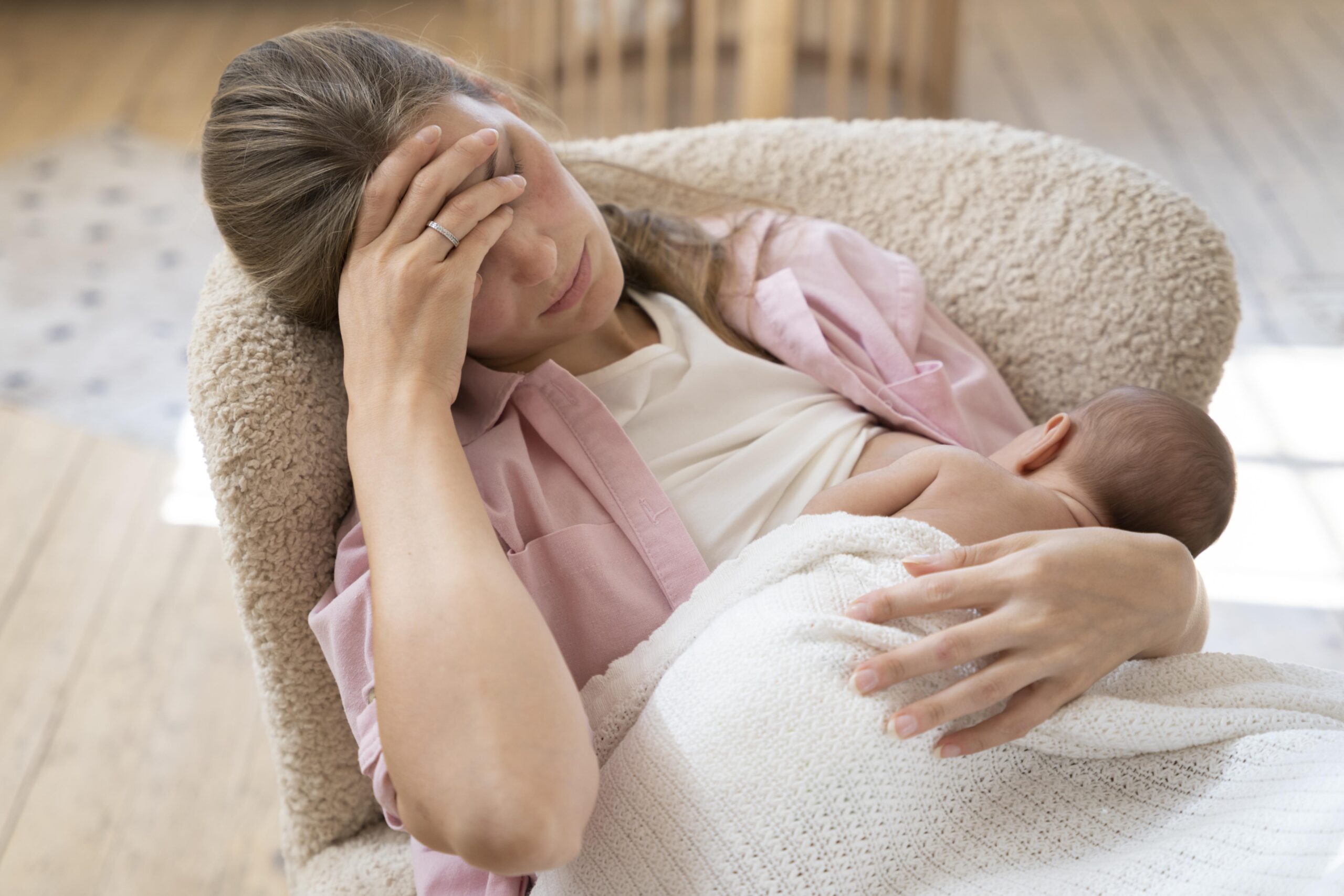
Approximately one in fifteen women in the world (6.8%) suffers from postpartum depression in the year after giving birth.and one in sixteen (6.2%) suffers from it during pregnancy, according to a systematic review published on Friday, May 1, 2026 in the journal The Lancet Psychiatry.
The analysis also reveals that the prevalence of depression postpartum—called major depressive disorder (MDD)—was highest in the first two weeks after delivery (8.3%) and remained elevated during pregnancy and up to one year after birth.
MDD is a relatively common diagnosis during pregnancy and the year after childbirthbut understanding its global reach has been difficult.
This mental disorder, whose symptoms are more severe than those called “postpartum blues” or “baby blues”causes deep sadness, loss of interest, difficulties coping with everyday life and extreme fatigue, among others.
The review led by Alize J. Ferrari, from the University of Queensland, Australia, analyzes the incidence of MDD during pregnancy, the peripartum (before and after childbirth) and the first year after birthand evaluates how previous studies have measured or quantified depression.
With data from 780 studies on more than 2 million women and girls between 10 and 59 years old, from 90 countriesresearchers found that symptom-based screening tools can overestimate MDD rates by 71% to 122% compared to full clinical diagnoses.
The study also found regional differences in MDD during pregnancy and the following year, with highest prevalence in southern sub-Saharan Africa (15.6% and 16.6%, respectively) and lowest in high-income regions of Asia-Pacific (3.1% and 3.3%, respectively).
In view of these data, The authors call for improving the detection, prevention and treatment of MDD in maternal care and emphasize that the first weeks after birth are critical.
For the professor of the Department of Evolutionary and Educational Psychology of the University of Seville, Spain, and researcher at the Institute of Biomedicine of Seville (IBIS), Emma Motrico, the work not only shows that Depression is present throughout pregnancy; it peaks two weeks after giving birth and persists throughout the first year postpartum.with a “devastating impact” for the mother, the baby and the family.
As a solution, he proposed integrating the mental health in obstetric services through clear prevention and treatment protocols, and develop clinical guidelines based on scientific evidence.
For Eduard Vieta, professor and head of the Psychiatry Service at the Hospital Clínic of Barcelona, and researcher at the Mental Health Network Biomedical Research Center (CIBERSAM), The study confirms that pregnancy is a period with greater psychiatric risk than other times.
For this reason, she regretted the lack of specialized programs in Spain to address women’s mental health at this stage and criticized that many patients do not receive comprehensive care that protects your well-being and the bond with the newborn“which is vital for future emotional development”pointed out to the SMC.