
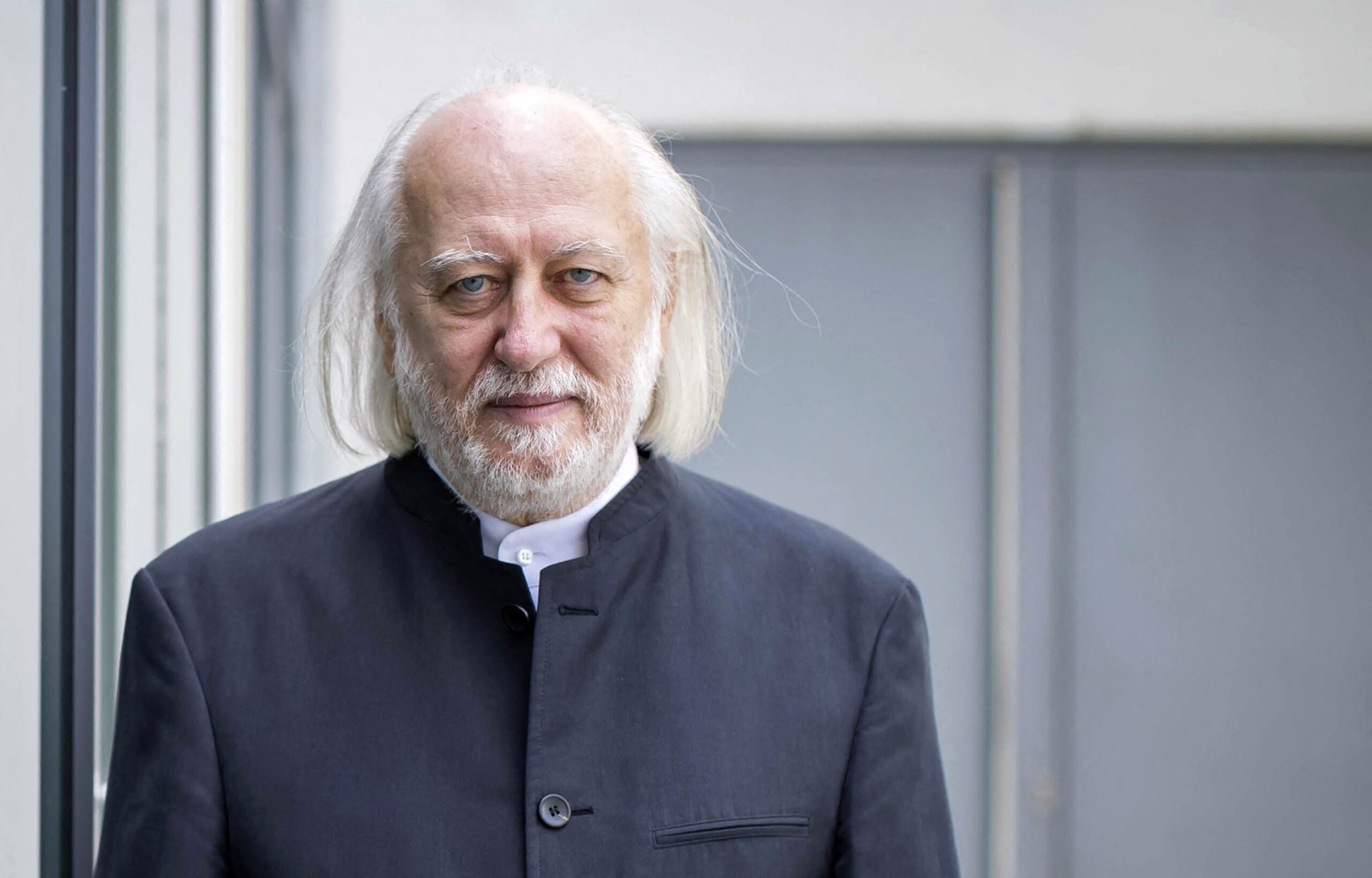
László Krasznahorkaiknown for works such as Melancholy of resistance and satanic tangowon the 2025 Nobel Prize in Literature on October 9. According to the Nobel Committee, his work is captivating and visionary. Furthermore, they stated that their literary production “reaffirms the power of art in the midst of apocalyptic terror”.
Born on January 5, 1954 in Hungary, Krasznahorkai is characterized by a dystopian narrative full of melancholy. In this regard, the author has commented that this vision is due to the feelings he experiences when thinking about the current world, which he describes as “very gloomy.”
According to the Royal Swedish Academy, the author has published 22 works in their original language. Of these, more than six have been translated into Spanish and four have been on sale in Guatemala. Although they are currently practically sold out in the country, local bookstores hope to restock in the coming months.
Among the works that have been read in Guatemala are Merciful relationships, Melancholy of resistance, Baron Wenckheim returns home and To the north the mountain, to the south the lake, to the west the road, to the east the river.
Complete list of books written by László Krasznahorkai in their original language
According to the Royal Swedish Academy and the international press, these are the complete titles of the 2025 Nobel Prize in Literature:
Works by László Krasznahorkai in their original language (with referential translation into Spanish)
- Sátántangó (in Spanish, satanic tango) – 1985
- Kegyelmi viszonyok: halálnovellák (Relationships of grace: novels of death) – 1986
- Az ellenállás melankóliája (Melancholy of resistance) – 1989
- Az urgai fogoly (The Prisoner of Urga) – 1992
- To Théseus-általános: titkos akadémiai előadások (General Theseus: Secret Academic Conferences) – 1993
- Kegyelmi viszonyok: halálnovellák (Relationships of grace: novels of death) – 1997
- Megjött Ézsaiás (Isaiah arrived) – 1998
- Háború is háború: regény (War and war: novel) – 1999
- This hat, néhány szabad megnyitás: művészeti írások / fotó Haris László et al. (Six in the afternoon, some free openings: art writings / photos by Haris László et al.) – 2001
- Északról hegy, Délről tó, Nyugatról utak, Keletről folyó (A mountain to the north, a lake to the south, roads to the west, a river to the east) – 2003
- Rhombolás is bánat az Ég alatt (Destruction and sadness under the skies) – 2004
- Seiobo járt odalent (Seiobo was down there) – 2008
- Az utolsó farkas (the last wolf) – 2009
- ÁllatVanBent / képek Max Neumann (AnimalInside / images by Max Neumann) – 2010
- Nem kérdez, nem válaszol: huszonöt beszélgetés, ugyanarról (Doesn’t ask, doesn’t answer: twenty-five conversations about the same thing) – 2012
- Megy a világ (The world goes on) – 2013
- Báró Wenckheim hazatér (Baron Wenckheim returns home) – 2016
- To Manhattan-terv / Ornan Rotem fényképeivel; Ornan Rotem esszéjét fordította Todero Anna (The Manhattan Project / with photographs by Ornan Rotem; Ornan Rotem’s essay translated by Todero Anna) – 2018
- Aprómunka egy palotáért: bejárás mások őrületébe (Pick and shovel work for a palace: entering the madness of others) – 2018
- Mindig Homérosznak: jó szerencse, semmi más: Odisejeva Spilja / Max Neumann képeivel; Miklós Szilveszter érhangjával (Always to Homer: good luck and nothing more: Odysseus’s Cave / with art by Max Neumann; with music by Szilveszter Miklós) – 2019
- Herscht 07769: Florian Herscht Bach-regénye: elbeszélés (Herscht 07769: Bach’s novel by Florian Herscht: story) – 2021
- Zsömle odavan (Zsömle is gone) – 2024
Some literary works of László Krasznahorkai translated into Spanish
satanic tango (1985)
This novel portrays the social decomposition of a country after the fall of communism, from the vision of a town in ruins whose inhabitants await the arrival of a supposed savior. It addresses themes such as moral decay and manipulation.
Melancholy of resistance (1989)
Tragicomic and melancholic, this novel—which consolidated its international prestige—is an allegory about totalitarianism, set in a small Hungarian town, immersed in an atmosphere of terror that intensifies with the arrival of a circus.
The author proposes a scenario in which intelligence is nullified by brute force, while violence and chaos drag characters who, between conformity and insignificance, fail to create a new order. It was adapted to film by Béla Tarr in 2000, with the title Werckmeister Harmonies.
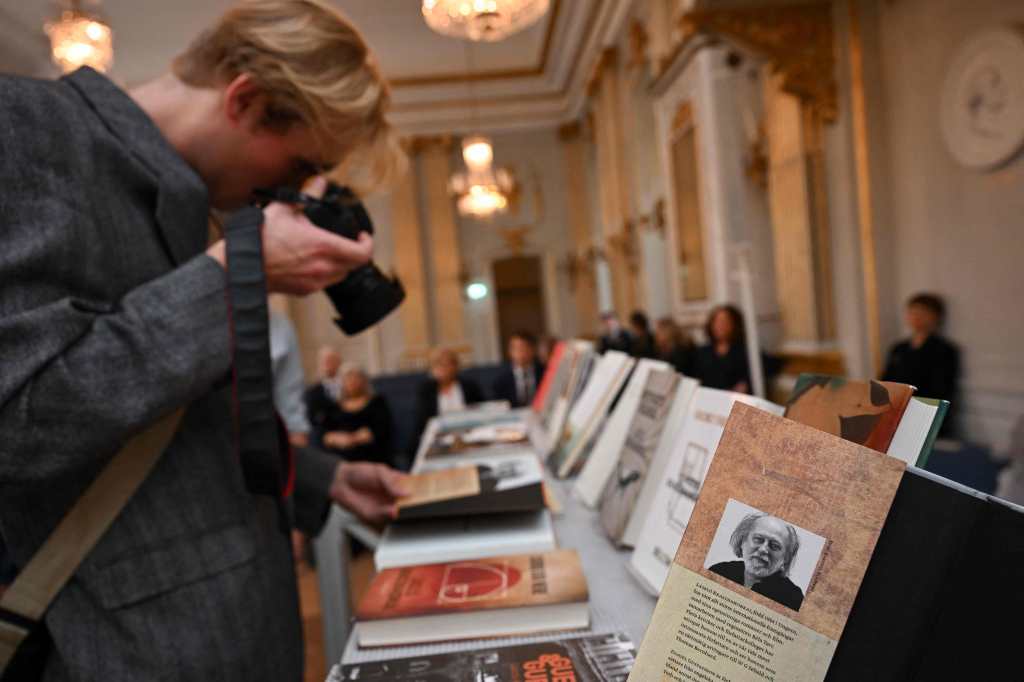
War and war (1999)
With a metaphysical and existential tone, it is considered his most ambitious work. Reflect on memory and writing as acts of salvation in the face of war and destruction.
The main character, Korin, is a provincial archivist who discovers a mysterious manuscript about two comrades struggling to return home after a war. Determined to commit suicide, Korin first travels to New York to preserve the manuscript, and in that city he meets various human types, in a world divided between vice and a mysterious beauty.
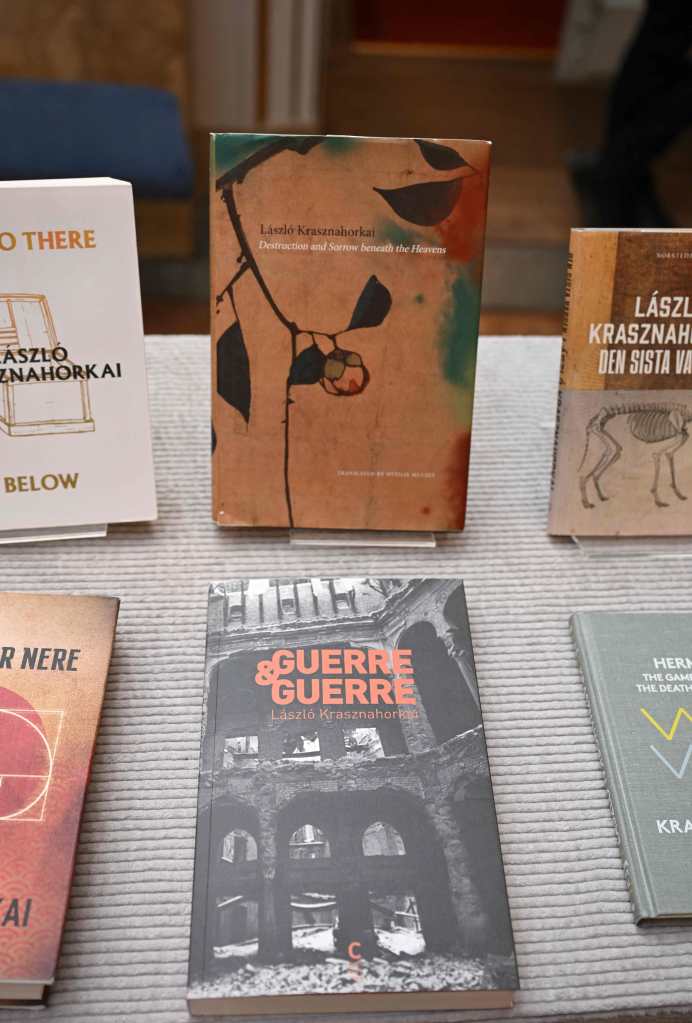
And Seiobo descended to Earth (2008)
Seiobo, a Japanese deity who has a peach tree in his garden that blooms every three hundred years and whose fruit grants immortality, decides to return to Earth. Her journey takes her to contemplate painting in medieval Russia and Renaissance Italy, to listen to Baroque music, to fly over the Acropolis in Greece, the Alhambra in Granada and the Pedrera in Barcelona.
Written following the mathematical Fibonacci sequence, this novel is a meditation on the sacred and beauty in art and everyday life.
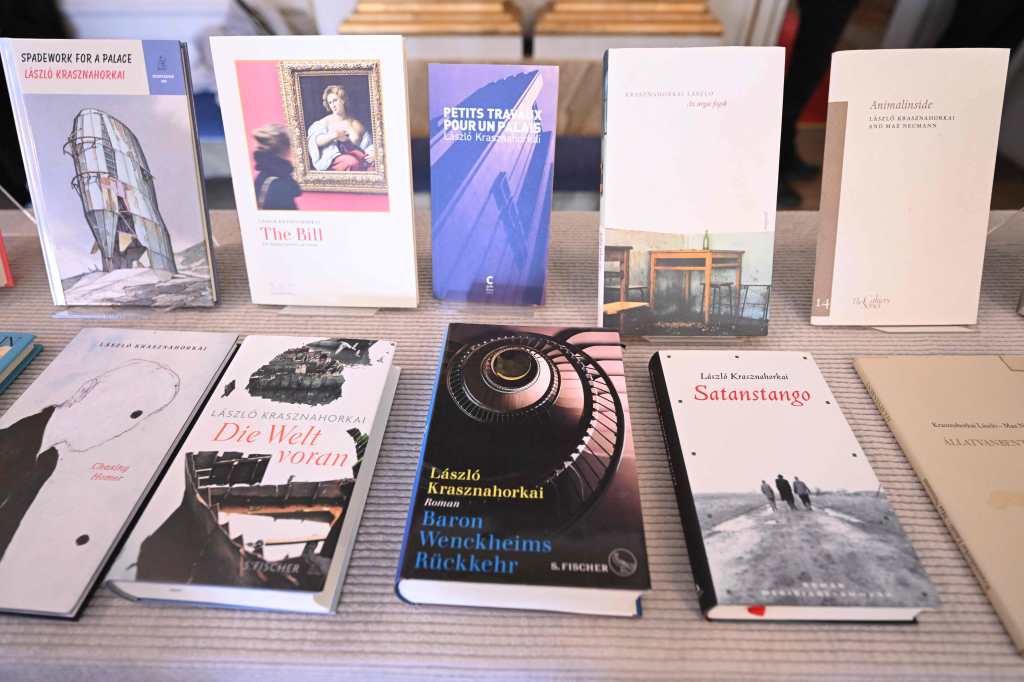
Merciful relationships (1986)
The questioning of illusions, perfidy, betrayal and human distrust runs through the eight stories that make up this volume, a synthesis of the motives that animate the whole of his work. The stories explore everything from the revenge exercised by a hunter on his neighbors, to the exile of some citizens condemned to an unbearable wait to board a ship under the surveillance of armed militias, or the attempts of an enigmatic character to evade his pursuers.

Baron Wenckheim returns home (2016)
This satire on ambition and other human behaviors was published in Spanish in 2024, coinciding with Krasznahorkai being awarded the Formentor Prize for Literature.
It tells the return of a Hungarian baron who, after spending a good part of his life in exile in Argentina, decides to return to his country in the hope of reuniting with his teenage love. His return generates confusion in the town, where he is received as a rich benefactor, although in reality he has squandered his fortune in the casinos of Buenos Aires.