
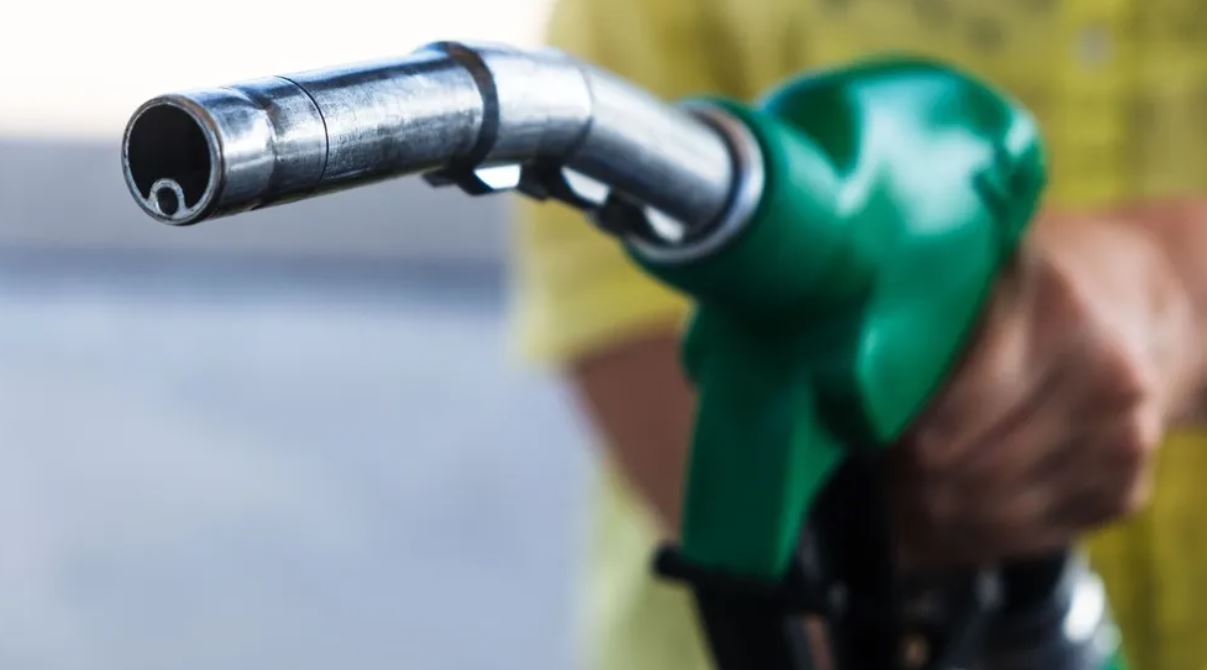
The chief economist for Latin America and the Caribbean of the World Bank Group, William Maloney, presented the report Economic Overview of Latin America and the Caribbean: Reconsidering Industrial Policyin a conference in which also commented on the impact and the search for solutions to the problems derived from the rise in oil and fuel pricesamong other effects.
He explained that, in general, for the region, the increase in fuel prices, the persistence of higher than expected interest rates – as countries continue to fight inflation – and the costs of fertilizers impacted some countries, leading to a reduction in economic growth prospects for 2026.
With the downward adjustment of that entity for Latin America and the Caribbean, announced in the first week of April, the economic growth prospects for 2026 went from 2.4% to 2.1%. For Guatemala, the projection remains at 3.7%, as estimated at the beginning of the year. Although an increase in fuel prices and an increase in inflation corresponding to March of this year is also reflected.
Inflation and debt
Regarding inflation, Maloney said, when referring to the region, that it had been reducing, but that now, with the rise in fuel prices, it could increase and have effects on international interest rates.
The executive indicated that this situation will complicate the management of fiscal policies in the future, because the region had started the year with debt levels that have been reduced since 2019 and the covid-19 pandemic. Progress has been seen in some countries; However, interest rates could complicate these debt problems, he added.
For example, some countries implement policies to moderate the impact of oil prices on the population, which will also affect the fiscal area, Maloney warned.
Expectations for the impact of the Middle East
Regarding the expectations for Latin America and the Caribbean in light of what is happening in the Middle East, the World Bank official said that the immediate impacts on the fiscal treasury due to this crisis are the prices of oil and gas around the world, which mainly affects countries seeking to reduce the impact on consumers through subsidies.
The second point is that, with respect to inflation, there is a risk of losing what has been recovered, which can also affect interest rates; That is, these will remain high or rise again, and this will impact the tax burden.
He added that there is pressure on consumers due to high interest rates in the region and that they are monitoring this situation.
CONTENT FOR SUBSCRIBERS
“These factors significantly impact the economy and the fiscal area, and that is why we reduced our forecasts for the region to 2.1%,” said Maloney.
Regarding the impact of prices and uncertainty on smaller economies, he commented that in the region there are many economies that, with the exception of Trinidad and Tobago and Guyana, are importers of oil and gas; Therefore, they face a special challenge.
Some economies have reduced their debts and could have less impact; However, problems due to the price of oil will persist, he added.
One of the questions is how sustainable it is for countries to continue absorbing external shocks through oil subsidies and how it can translate into debt and affect fiscal sustainability. In this case, he explained that it not only affects small economies, since when talking about higher fuel costs when importing them, ideally the region It should have fiscal space to manage them without transferring them to the consumer; however, this impacts the budget.
He explained that, Due to the magnitude of the fiscal effort to control these prices, each country must decide how much it can contribute and how much their populations can resist.
“It is very difficult; the region has been in a process to reduce fuel subsidies, but ideally these are very temporary measures.”
Maloney commented that “these are times of uncertainty. There is uncertainty about our trade relations going forward, the prices of key factors of production, starting with oil, but also with capital; therefore, we have challenges that we have not faced, but that the region is dealing with.”
“We hope that the crisis will be resolved quickly and we can lower prices; they probably won’t go down to where they were before, but even if it’s a little,” he added.
In Guatemala
In Guatemala, several proposals have emerged to mitigate the effect of the increases; These range from implementing subsidies for gasoline and diesel to exempt the distribution tax for petroleum and its derivatives (IDP), or create a price stabilization fund.
Last week, in Congress, authorities from the Ministry of Finance mentioned that they support a ssubsidy of Q8 per gallon of diesel and that a subsidy of Q4 per gallon of gasoline is under discussion, the term would be two months, a measure that would require Q1.3 billion.
That amount, according to the Government’s proposal, would be financed with adjustments to the budget, through uncommitted cash balances and tax collections projected for these months.
The measure would be applied while the evolution of the conflict in the Middle East is observed and other actions are defined to protect the Guatemalan economy and the population.
The authorities assured in Congress that they have worked on the readjustment of the budget so as not to reduce the space allocated to key programs, such as health, education and security.
Regarding the possible fiscal and budget impact, two analysts were consulted.
The executive director of the Freedom and Development Foundation, Paul Boteo, pointed out that, due to the instability of oil prices, the subsidy may not have the expected effect on the final consumer. He added that these types of measures are applied indiscriminately and raise doubts about whether the benefit reaches the user.
He indicated that one of the questions is how much of the State budget would be involved in maintaining this measure in the medium and long term and how it would be financed if prices remain high or continue to increase.
🔎 #EyeAlDato: Deputies do not reach agreements for fuel subsidies and division is evident in Congress.
⛽ What implications does this scenario have for prices?
🔎 Know the details: https://t.co/RNaIWdk2pt pic.twitter.com/YE4yB8lBTI
— Free Press (@prensa_libre) April 8, 2026
He criticized the lack of transparency in subsidies and that they are applied indiscriminately, not only to the vulnerable population.
In his opinion, the State budget for 2026 already contemplated a relatively high fiscal deficit compared to previous standards.
He considers that, if a budget expansion is added to finance the subsidy, it would increase pressure on public finances. For now there is talk of a readjustment; However, if high prices continue, it will be necessary to define whether to maintain financing or resort to budgetary expansions.
Boteo indicated that the price of a barrel of oil fluctuates around US$100 and has not reached the highest levels initially expected. He considers that the economy can still face this shock without resorting to these measures and that they should be evaluated in more critical scenarios, such as prices of US$150 or US$160.
“So, in any case, the ammunition would have to be saved for a much more complex scenario,” said Boteo.
“I think we should be cautious and not resort to these types of policies in the first instance, precisely to preserve that fiscal space for more complex scenarios.”
“The tax exemption, I think, is politically unviable. It did not occur in the Giammattei government because, if they are eliminated, it is difficult to reestablish them later.”
When consulted, Ricardo Barrientos, executive director of the Central American Institute of Fiscal Studies (Icefi), explained that any measure—subsidies, exemptions or others—will have a fiscal impact, and indicated that this impact depends on multiple technical factors, and what should be sought is to minimize the negative effects.
In his opinion, any initiative aimed at reducing or eliminating the IDP is inconvenient and fiscally harmful due to its ineffectiveness. He pointed out that, if a gallon of diesel costs Q45, the reduction would only be Q1.30, in addition to definancing the Road Conservation Fund (Covial).
He indicated that these proposals may respond to political interests or generate fiscal pressure on the Government, and that these measures would have a high fiscal cost and little impact on reducing prices.
CONTENT FOR SUBSCRIBERS
Regarding the subsidy, he indicated that it depends on the source of financing and reiterated that it should not be applied indiscriminately.
He recalled that, if financed with debt, the cost is high; Therefore, a readjustment could be more viable, as long as the sources and which items or programs are going to be reduced are clearly defined.
He noted that the use of cash balances not incorporated into the budget could be a viable option, since it does not increase the deficit or affect other programs. Furthermore, an alternative would be funds allocated to the Development Councils (Codedes), due to their low execution.
He also indicated that it must be defined to whom the subsidy is directed and how it will be paid. He considers that the ideal would be a direct subsidy to the consumer and not to the importers.
He explained that the beneficiaries should be selected according to socioeconomic conditions, to avoid granting it to people with high purchasing power or large companies. However, he warned that its implementation would be complex in Guatemala, due to the lack of a registry of beneficiaries and technical and operational limitations.
For this reason, it was considered viable to use the online electronic invoice (FEL), so that the discount is directly reflected in the purchase of fuel and the stations report the reduction applied to the Ministry of Finance.