
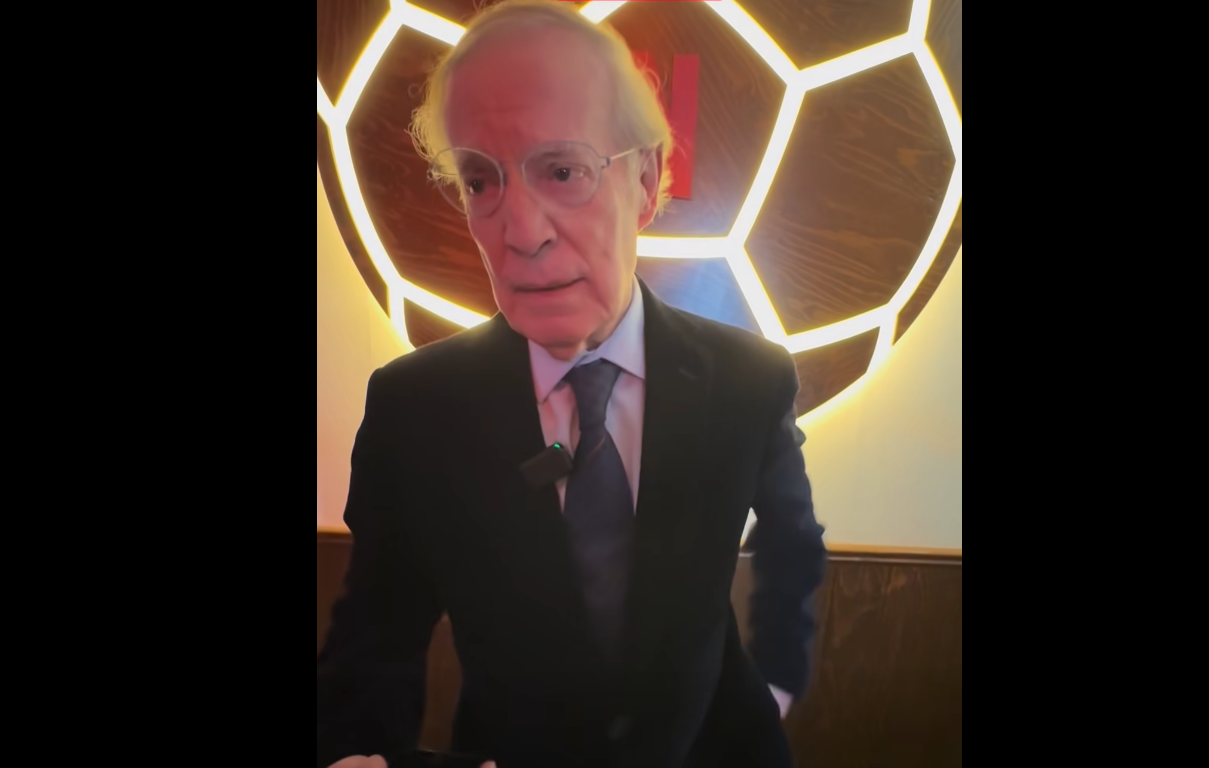
In a reel published by the Mexican sports newspaper Récord on June 8, 2026, José Ramón Fernández appears in front of the camera talking about the Netflix film México 86 and, bluntly, states: “The film tells a lot of the truth.”
Then, when referring to the real characters that appear in the film, he adds: “This was the president of the Federation… This was Don Emilio Azcárraga who has already died. The president of the Federation Rafael del Castillo, who has already died, Guillermo Cañedo, who has already died. That’s how they were. As is.”
Although the initial discovery of the scandal corresponded to reporter Antonio Moreno (of Imevisión and Ovations), Fernández was the one who turned it into a national scandal. In his program (from that time) At the same time showed on the screen the falsified birth certificates of the four adult players—Aurelio Rivera, José Luis Mata, Gerardo Jiménez and José de la Fuente.
In the same video, Fernández recounts how he came to the conclusion of the trap: “The Federation published an almanac of the teams that were going to the Youth World Cup… We came to the conclusion that there were falsified ages. We looked for records. We proved.”
And he confirms the decisive role of Guatemala: “And then Guatemala protested. Yes. And FIFA decided to punish the Youth World Cup and the Youth World Cup federations…”.
Years later, Fernández summarized the personal consequences with a phrase that has become emblematic: “The World Cup in which I couldn’t go, that they vetoed me because of the issue of the cachirules, which we had taken out two years before.”
That veto from the 1990 World Cup in Italy, as he declared, was “revenge” for having exposed one of the biggest “desk tricks” in the history of Mexican soccer.
Now, with the premiere of México 86 on Netflix – where his own son, Juan Pablo Fernández, plays him on screen – the sports communicator has once again publicly referred to the case.
He reel de Récord confirms that, for him, that story continues to be part of a broader context of power and corruption that the film has managed to faithfully portray.
For Guatemalans, Fernández’s testimony (and Moreno’s previous work) has special meaning. Thanks to that FIFA sanction in June 1988, Guatemala inherited the Olympic quota and played a men’s soccer tournament for the first and only time at the 1988 Seoul Olympic Games.
José Ramón Fernández tells how they identified the “cachirules” players of the Mexican National Team in the Concacaf U-20 World Cup held in Guatemala in 1988.