
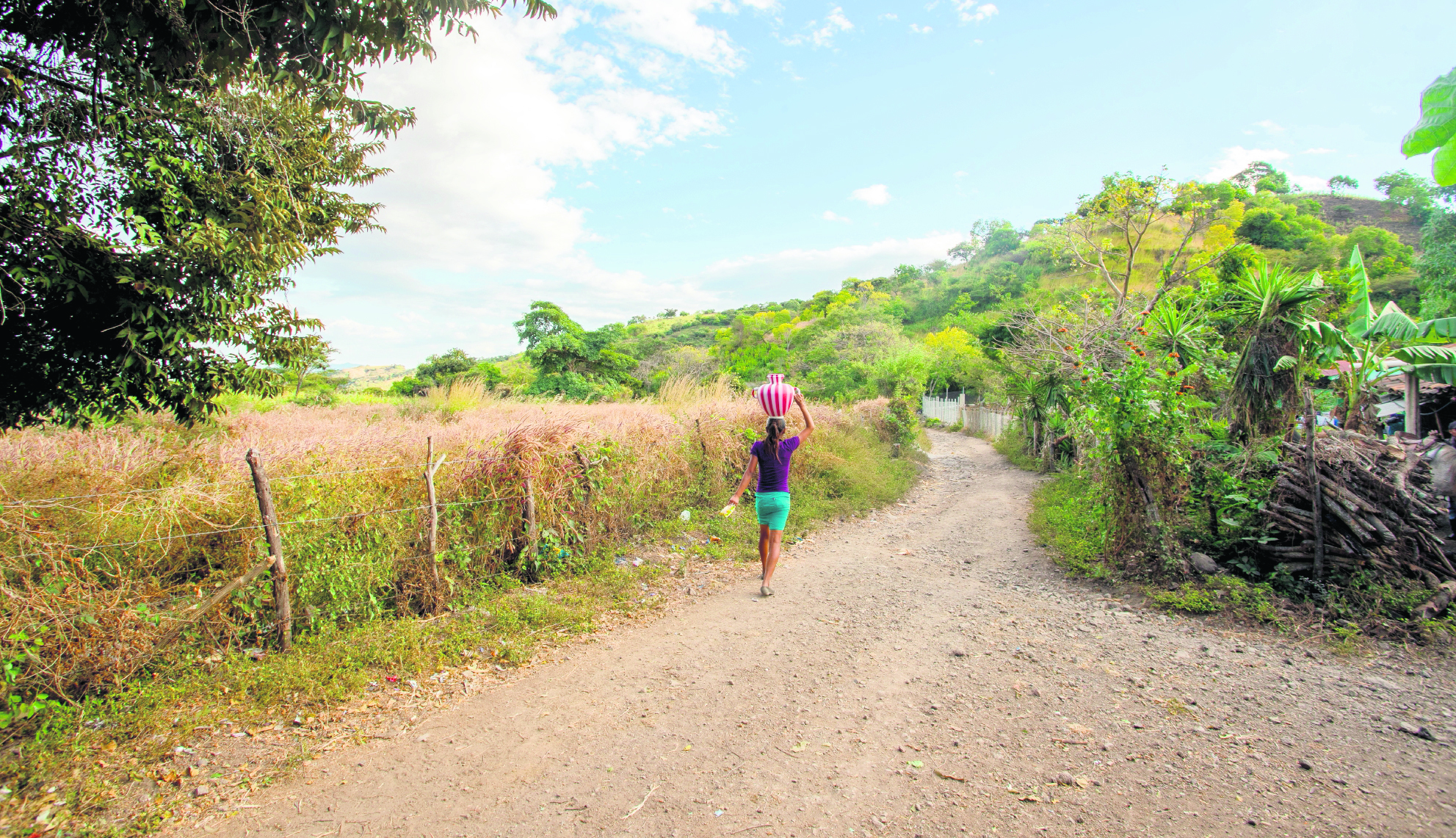
The forecasts of the National Institute of Seismology, Volcanology, Meteorology and Hydrology (Insivumeh) indicate that 2026 will have an irregular rainy season, with less precipitation than expected and an increase in temperatures of up to 3 degrees Celsius, behavior related to the transition to a more intense El Niño phenomenonwhich has not been observed for decades.
As part of this irregular behavior, a extended dog days which could range between 25 and 40 dayswhen the usual period lasts about 20 days. In the Northern Transverse Strip It will be longer than in the rest of the regions of the country.
According to the Insivumeh, the rainy season occurs bimodal way; That is, it has two precipitation peaks in the year. The first occurs between May and June; Then there is a period in which rainfall decreases, known as the dog days, and then a second peak is recorded in September and October.
Rebeca Rodríguez, from the Insivumeh Meteorological Research and Services Department, points out that, due to the influence of oceano-atmospheric conditions, this year there will be a longer than usual dog days. Furthermore, it will be drier compared to other years.
“At the moment we have stipulated that the heat wave could last between 25 and 40 days, and this will depend on each region,” said Rodríguez.
In Petén, the Boca Coast and the Caribbean, a less marked decrease in rainfall is expected, while the decrease will be more extensive in the Northern Transversal Strip, between 35 and 40 days. In the East and the Pacific it will range between 30 and 35 days, and in the West and the Central Highlands it could last between 25 and 30 days, approximately.
The forecast also establishes the beginning of the dog days, which in some regions will occur earlier. For example, in the West, the Central Highlands, the valleys of the East and the Pacific it will begin in the first half of July and end in the first half of August.
For the Northern Transverse Strip, the meteorological phenomenon will appear between the second half of July and the second half of August.
The Insivumeh forecasts indicate that the rain deficit during July and August could be estimated between 37% and 63%and that the most affected departments would be El Progreso, Jalapa, Sacatepéquez, Sololá, Zacapa, Baja Verapaz, Chiquimula, Totonicapán and Guatemala.
High temperatures
Due to the transition to the El Niño phenomenon, the Insivumeh forecast is that temperatures could increase up to 3 degrees Celsius in the country, and during the dog days these conditions will be more evident due to the decrease in precipitation.
Alex Guerra, general director of the Private Institute for Climate Change Research (ICC), points out that during the rainy season the presence of clouds attenuates the sun’s rays, which keeps the environment cool. However, during the heatwave the cloudiness reduces and the temperature increases, this has a negative effect on agriculture.
Information from the Ministry of Agriculture, Livestock and Food (MAGA) indicates that, with temperatures below 25 degrees Celsius, conditions are cooler and there is less thermal stress for crops. Furthermore, keeping the thermometer between 20 and 27 degrees Celsius is ideal for most crops, but when it begins to rise, performance is affected. The temperatures above 29 degrees Celsius maintain high thermal stress in plantations and generate greater demand for water.
Regarding the impact on agriculture, Alberto Cano, from the Institute for Research in Natural Sciences and Technology (Iarna), points out that the prolonged heat wave affects production, performance and even the crop quality. The greatest impact occurs in family agriculture, whose producers do not have alternative irrigation systems.
“The stagnation in rains stops the productive cycle of crops, mainly those for mass consumption, such as vegetables and basic grains. This brings a significant decrease in production (…), and can also generate lower quality levels,” says Cano.
According to the researcher, historical data suggests that geographical areas such as the Dry Corridor They are the most vulnerable. Among them he mentions the departments of Zacapa, Chiquimula, Jalapa, Jutiapa and El Progreso, as well as the south of Huehuetenango and part of Quiché.
He adds that, in scenarios like this, planned and comprehensive actions with a medium and long-term approach are essential to reduce the impact of the heat wave. When this does not occur, measures can be adopted such as using or building artisanal reservoirs to store water; implement comprehensive regenerative agriculture techniques, and place layers of organic matter at the base of crops to reduce evaporation.