
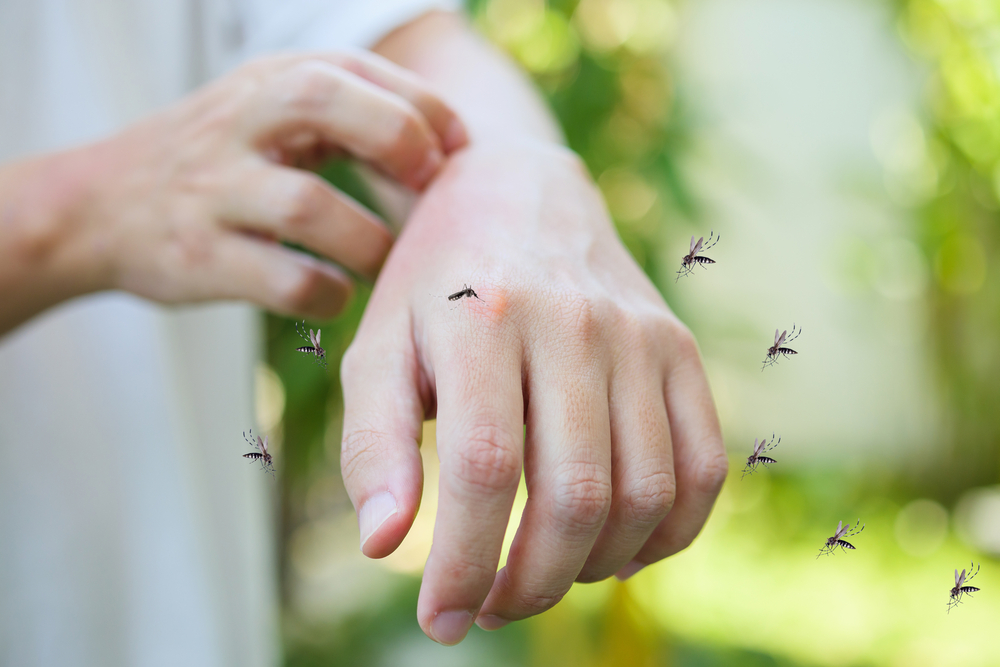
After a decade without the presence of chikungunya In Guatemala, the Ministry of Health confirmed a contagion in Catarina, San Marcos, which already appears in the registry of accumulated cases in the Americas of the Pan American Health Organization (PAHO).
Doctor Thais dos Santos, PAHO regional advisor on arboviruses, in an interview with Free press, talks about the virus, transmitted by the Aedes aegypti mosquito, which has caused a sustained increase in cases since 2025 and has led to an epidemiological alert in the region.
It is known that, once people have been infected, they acquire lifelong immunity; However, in Guatemala, during the 2015 epidemic, records were few, as 658 were confirmed, which constitutes a higher risk scenario.
Why does chikungunya reappear in the region after a decade?
Chikungunya never left. Unlike dengue, once it causes infection in a person, they have lifelong immunity, it is like a natural vaccine. Once it has caused a large epidemic in one place, it is unlikely to cause another one in that place.
Chikungunya epidemics tend to be explosive, affecting many people. What we see is that the virus moves to places where there are still susceptible people. So, a country that has not had the virus for a long time accumulates people without this natural immunity, and that is where you see these small epidemics.
We are very attentive to places where it has not circulated to respond early and in a timely manner and minimize the impact that these epidemics have on society.
Guatemala has already confirmed a case of chikungunya, what is the risk?
We have many countries in this situation, and these first introductions must be monitored and control measures taken where the case is identified. The issue of arbovirus is a shared responsibility of the community, civil society and local governments; We have to act in a coordinated manner to limit the transmission of the disease.
Does the virus circulating again in countries cause concern?
We know this virus and the damage it does; More than worrying, you have to take care of yourself. We know that, once it is introduced into a place that has not had it for a long time, we must take measures, intensify surveillance processes, ensure that doctors and the entire health sector are ready to recognize cases early, manage them well, prevent severity and death.
This is a virus that was first identified over 50 years ago; So, we know him, the issue is what we do to fight him.
Can cases increase as they did in 2015, when the last epidemic was?
Places where there were large epidemics have many people already immunized, and it is unlikely that they will have the disease again, because the available evidence indicates that immunity is lifelong.
Who is going to be affected? People who have just been born, children under 10 years old. Great care must be taken in these populations that were not infected in the previous epidemic.
In Guatemala there were 658 confirmed cases of chikungunya in 2015, so many of the population do not have immunity to the virus. Is that a risk?
Sure, but we have to see arboviruses as a whole. the same mosquito Aedes aegypti that transmits dengue transmits chikungunya and Zika, and our vector control programs are prepared. We are implementing a new collaborative surveillance modality in the region, where epidemiological data is automated and allows us to quickly see where the problem is in order to have more targeted action.
A possible reintroduction of chikungunya is something to pay attention to, but it does not catch us off guard.
The diseases that are transmitted by Aedes have a temporal nature; We already know when they circulate: in the northern hemisphere, in the second part of the year, and in the south, in the first part of the year.
Can changes in climate affect the spread of chikungunya?
We are seeing places with higher temperaturesand in years with a lot of heat there is a greater spread of the viruses transmitted by Aedes, because the mosquito bites more, needs less time with the virus inside to infect it and its life span is shorter.
With the rains there are two situations: if it rains a lot, it washes away the mosquito breeding sites, but there is always stagnant water, and in those places the mosquito lays its eggs to multiply. When it doesn’t rain, people store more water; So, there are also hatcheries.
Arboviruses are diseases that have a tangible impact of climate change, and the warmer the weather, the more favorable the conditions are for the transmission of the virus.
If Aedes aegypti transmits dengue, chikungunya and Zika, can we expect an increase in cases of the three diseases?
In theory it could be, but that is not what we are seeing. We have few cases of Zika, and this year we have seen low circulation of dengue, which does not surprise us, because we had a large epidemic in 2024. After major epidemics we see a couple of years of lower transmission.
Normally, when we see chikungunya epidemics, dengue cases tend to go down; that is the experience in the region.
What symptoms does chikungunya cause?
With viral diseases, the person feels tired, with muscle pain, fever, but what differentiates chikungunya is intense joint pain, especially in the smaller joints, in the hands and feet. It is a very strong and disabling pain.
For most, this pain resolves within a week, but for a proportion of the population it may last longer.
Can the disease lead to death?
Yes, especially at the extremes of life: young children and the elderly, with underlying conditions that can exacerbate, trigger decompensation and progression to death.
At the regional level, the lethality of chikungunya is equivalent to that of dengue: normally, for every 2,000 reported cases, one person dies.
Given this scenario, what is the call to the Ministry of Health to respond in time to a possible chikungunya epidemic?
The recommendations are the same for all countries in the region: intensify surveillance so that cases are detected early; eliminate breeding sites to ensure no mosquitoes or transmission; strengthen communication with the population so that they participate in prevention; prepare health services so that cases are adequately managed and that facilities are ready for a possible increase.
We are facing a higher risk scenario, because we have had many years without transmission of this virus, but we are in a better position than 10 years ago: we know this virus better and we have more solid tools than in 2013. So, we can anticipate and have a timely reaction.