
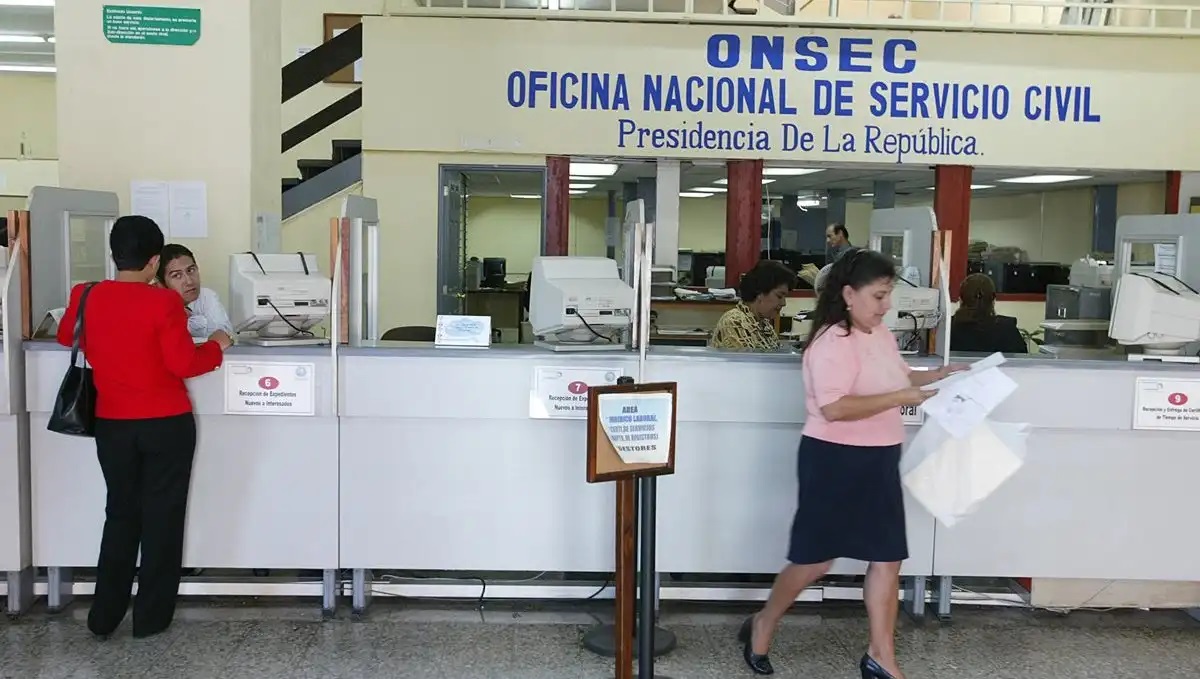
The State retirement in Guatemala It is a right for public workers who have completed the years of service and the required contributions. However, to receive and keep it, interested parties are subject to strict rules.
Staff of the National Civil Service Office (Onsec) remember that this regime is independent of the IGSSso a person can contribute or retire in both systems without one affecting the other.
However, both models present key differences that often raise doubts, especially in terms of age and time of contribution.

Age and contributions: differences between passive classes of the State and the IGSS
According to the article of the law, a person can opt for state retirement If you meet any of these criteria:
- 20 years of serviceregardless of age
- 50 years of age and at least 10 years of service
In contrast, to access the old-age pension of the IGSSthe affiliate must meet two requirements:
- Have contributed at least 240 installments during your working life
- Have 60 years old
This difference allows for various scenarios in the state regime. For example:
- Start at age 20 and retire at age 40
- Start at age 50 and retire at age 60
- Start at age 40 and retire at age 50
On the other hand, in the IGSS old-age pension The requirement is more rigid, since the member must simultaneously meet the minimum age and the number of required fees; If you have completed the contributions but do not reach the required age, you will not be able to access the pension.
State retirement versus the IGSS old-age pension
A State retiree consulted by Free press He explained that, after completing 20 years of service in a public entity, he decided to retire.
However, he was still more than 20 years away from reaching the 60 years required by the IGSSdespite having completed the necessary quotas.
Given this scenario, it is key to know the conditions that allow access to the state retirement and the differences compared to the IGSS regime.
Difference between retirement and pension
Although they are often used synonymously, both terms have different meanings:
- Retirement: is the cessation of work activity after meeting age or length of service requirements
- Pension: is the monthly payment that a person receives as a result of retirement or other causes, such as widowhood, orphanhood, or disability
Conditions to avoid losing the State pension
He article 36 of the Passive Classes Law establishes that the payment of the state pension It only becomes effective if the beneficiary demonstrates that he or she no longer works in the public sector.
To do this, you must present:
- Certificate of delivery of office
- Affidavit of not providing services to the State
This requirement applies to:
- State Agencies
- Decentralized entities
- Autonomous entities
Onsec authorities emphasize that this step is essential, since without verifying the termination of employment under line 011 payment cannot be started.
Likewise, they explain that a person retired under this regime cannot continue working in the State under that category. Neverthelessyes you can work in other lines or in the private sector.
In contrast, being old-age pensioner IGSS allows you to work in the public or private sector, without restrictions.
Consequences for breaking the law
As explained by article 38 of the lawFailure to comply with these provisions may result in significant sanctions, including:
- Immediate suspension of pension payment
- Obligation to return money received improperly
- Possible administrative sanctions
The case of the State retiree mentioned above comments that after receiving his retirement the State considered that he could continue working and he had an opportunity to work again in the public sector under line 011 and never reported.
Since this case occurred almost 20 years ago, the government systems were not online or centralized and he did not report the case. What happened? Almost a decade after being retired, the State asked him to return the money he received as a pension during the time he worked under line 011.
For this reason, Onsec authorities recommend that retirees obtain adequate information and comply with all legal conditions to avoid future problems.
Exceptions
Of course, there are exceptions to this rule. For example, the USAC professors and researchers They can retire and continue teaching.
Likewise, some beneficiaries of the state retirement They can receive their monthly contribution and continue working in the public sector, even under the line 011.