
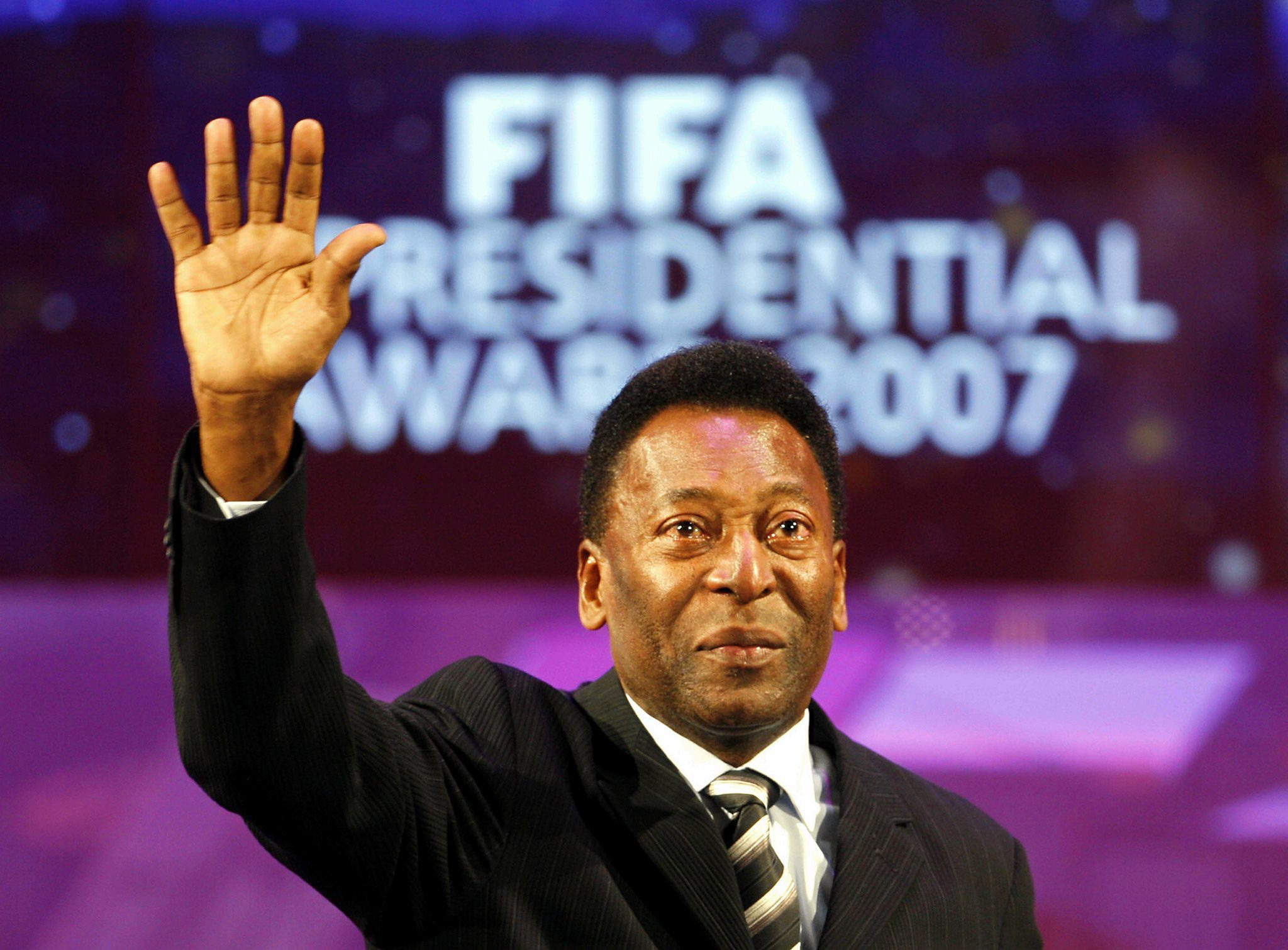
A young Brazilian named Edson Arantes do Nascimento, just 17 years old, surprised the world in 1958 by becoming the youngest player to score a goal in a World Cup. Ten days after that first goal, on June 29, Brazil won the title and the legend of Pelé began to be forged, the only footballer to have won three World Cups.
Although the Brazilian teenager finished as the second scorer of the tournament, only behind the historic Just Fontaine, who scored 13 goals for France, Pelé was decisive in the final. Against Sweden, he scored two key goals to seal the 5-2 definitive. He established himself by lifting his first Jules Rimet trophy at the Råsunda stadium in Solna.
To achieve this feat, Pelé played four matches, including the final, accumulating 360 minutes in which he scored six fundamental goals. He was part of a team full of talent, along with figures such as Mario Zagallo, Mané Garrincha and Vavá, and left the Soviet Union, Wales and France behind.
His first goal in a World Cup came precisely against Wales. At the Gamla Ullevi stadium, in front of almost 26 thousand spectators and after an assist from Didí, Pelé scored with his right foot in the 66th minute.
That goal made him the youngest scorer in World Cup history, at 17 years and 239 days, a record that remains in force more than six decades later.
Pelé and a unique record
His three World Cups make him an unrepeatable footballer. Only 20 other players have managed to win more than one: fifteen Brazilians, four Italians and one Argentine, all with two titles.
After his consecration in Sweden 1958, Pelé was crowned again in Chile 1962 and Mexico 1970. In the Chilean tournament, despite suffering a muscle injury that limited him to only two games, he contributed a goal and an assist on the way to the title.
In England 1966 he experienced the bitterest side of football. After scoring in his debut against Bulgaria, he was the victim of constant fouls and poor referee protection, which ended with Brazil’s elimination in the group stage. That experience even led him to think about never playing in a World Cup again.
However, fate had one last exhibition in store for him. Mexico 1970. In that tournament he led a team that many consider the best of all time. Not only did he score four goals, including the one that opened the final against Italy, but he left memorable plays that reflected all his genius.
On June 21, 1970, in the Azteca Stadium, Pelé said goodbye to the World Cups by lifting his third World Cup. A story that began on June 29, 1958 in Solna, the day the world discovered that a legend could wear football boots.